|
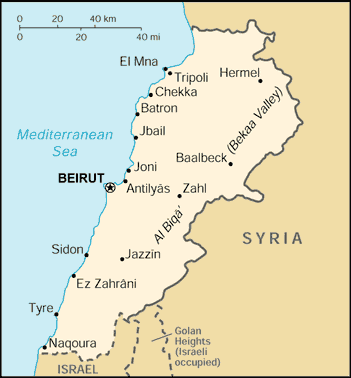
Largest Cities |
| City |
Population |
Estimated |
| Beirut |
1,878,200 |
2002 |
| Ţarābulus aڑ-ٹam |
200,000 |
2002 |
| Saida |
140,000 |
2002 |
Key Data |
| Region: |
Middle East |
| Population: |
4,322,100 October 2002 |
| Area Total: |
10,400 km2 |
| Area Land: |
10,230 km2 |
| Coast Line: |
225 km km |
| Capital: |
Beirut |
| Climate: |
Mediterranean; mild to cool, wet
winters with hot, dry summers; Lebanon mountains experience heavy
winter snows. |
| Languages: |
Arabic (official), French
(official), Armenian, English |
| Currency: |
1 Lebanese pound (£L) = 100
piasters |
| Holiday: |
Independence Day, 22 November
(1943) |
Average Daily Temperature |
| Capital: |
Beirut |
| January: |
13°C / 55.4°F |
| July: |
25.2°C / 77.4°F |
| Annual Rainfall: |
34.4mm / 872.9'' |
Boundaries |
|
Syria: |
375km |
|
Israel: |
79km |
Ethnic Divisions |
| Arab |
95% |
| Armenian |
4% |
| Jewish and others |
1% |
|

Religions
|
| Muslim (includes
Shi'a, Sunni, Druze, Isma'ilite, Alawite or Nusayri) |
69% |
| Christian (includes
Maronite, Orthodox, Catholic and Protestant sects among others) |
30% |
| Jewish |
1% |
|